Current projects, publications, and research interests
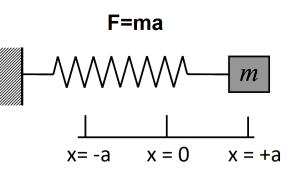 The foundation of my research is my views on the essential content of physical theories. The “essential content” is those parts of a theory that actually matter for the predictive success of the theory. For example, what does a formula such as Newton’s second law (F=ma) really tell us? The most straightforward answer is: “the quantity of force equals the product of mass and acceleration”. But is this talk of entities and properties such as forces and masses in fact what makes the theory predictively successful? Or is the part of the theory that matters perhaps the structure of the theory? Or something else? In my dissertation, I argue that the essential content of physical theories is not a description at all (whether of entities, properties, or structures). Rather, the essential content of these theories is their prescriptions for how to interact with the system by constructing certain theoretical quantities from local experimental data. What makes the theory successful is not what it says about what there is, but rather what it tells us about what to do.
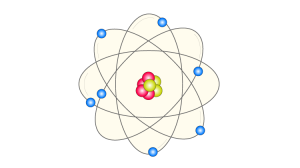
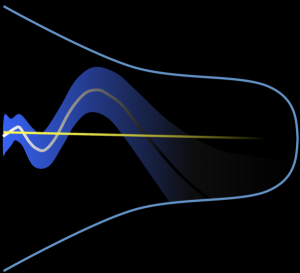 How are theoretical terms of a successful theory related to unobservable objects of reality? Some philosophers suggest that the entities or properties in the theory must directly refer to or represent entities and properties in the world. Others say that the structure of the theory must resemble the structure of the world. But none of these approaches seem to hold up in the face of the history of science. Niels Bohr’s model of the atom, for instance, is excellent at predicting a whole host of phenomena in single-electron systems, but its entities (little charged grains of dust) and the properties it attributes to them (swirling around a nucleus) are completely wrong, at least if quantum mechanics is correct. So what made Bohr’s theory so successful? I argue that this success has to do with its prescriptions for how to assign dynamical states to the system. Therefore, it is the states that must somehow connect to unobservable reality, not entities or properties or structures. But states have a much more sophisticated relationship to reality: they do not refer to or represent or resemble the true states, but rather track them in a precise, mathematical sense as formulated in dynamical systems theory.
 When are two physical theories equivalent to each other? For example, why do physicists say that Hamilton’s theory of mechanics is equivalent to Lagrange’s, despite the fact that each has models that the other lacks? Some philosophers say that to be equivalent, two theories must be intertranslatable, which indicates a one-to-one correspondence between the sentences of the two theories. Others look for a one-to-one match-up between the structures of one theory and those of another. Yet others appeal to more abstract mathematical constructs like “category theory” to explicate equivalence. What all of these approaches have in common, though, is that they take the theory to be fixed, meaning they assume the theory is the same pre-ordained set of statements or models in every application of the theory. I argue that physical theories are open-ended, as their application depends on local context, and this has profound implications for equivalence. Two theories are said to be equivalent if they result in the same equations of motion for those cases to which they both apply in practice.
 How should we explain the wide-ranging and impressive success of our physical theories in making predictions? Is it because the theory is in some sense approximately true? Does it mean that the ontology of the theory corresponds to reality? Philosophers of science fall into two distinct camps regarding this question. Realists claim that the enormous success of the theory would be an inexplicable miracle unless the theory is some kind of a window to unobservable reality, allowing us to read off the ontology of the world from the theory. Anti-realists, on the other hand, find the realist’s claim problematic because of its poor historical track record. I argue that this is a false dichotomy: physical theories are connected to unobservable reality in a robust and systematic manner (through tracking), so their success is not a coincidence; yet since this connection is referentially opaque, one cannot expect to read off the ontology of the world from the theory.
 All of the lessons above can be gleaned from the history of the formation of quantum mechanics starting with Niels Bohr’s atomic model and ending with Werner Heisenberg’s matrix mechanics. Bohr’s proposal was very successful in predicting the behavior of single-electron systems like the hydrogen atom or the helium ion, but it failed to track systems that had more than one electron. Twelve years of struggle between 1913 and 1925 led physicists such as Heisenberg to the conclusion that what is hamstringing the theory is the pesky orbits that the electrons are supposed to be following in Bohr’s “planetary” model of the atom. By removing the ontological descriptions of the theory and focusing on its dynamical prescriptions, Heisenberg ushered in the age of modern quantum mechanics.
